Few desserts capture elegance as effortlessly as Panna Cotta. This classic Italian sweet, whose name literally means “cooked cream”, is the definition of refined simplicity. Made from just cream, sugar, vanilla, and gelatin, it delivers a silky-smooth texture and delicate flavor that feels luxurious yet light.
The beauty of Panna Cotta lies in its balance — rich but never heavy, sweet but not overwhelming, creamy yet clean on the palate. It’s a dessert that celebrates good ingredients and gentle technique rather than complexity.
Originally from Northern Italy’s Piedmont region, Panna Cotta has become a global favorite. Whether topped with berries, caramel, or coffee syrup, it adapts beautifully to every season and occasion.
In this article, you’ll learn its origins, how to perfect its creamy texture, ways to serve it beautifully, and how modern chefs are reinventing this beloved classic. Whether you’re a home baker or a culinary enthusiast, Panna Cotta will show you that true sophistication comes from simplicity — one spoonful of creamy perfection at a time.
Table of Contents
The Origins and Essence of Panna Cotta
Panna Cotta was born in Piedmont, a region known for rich dairy and rolling pastures. Early Italian cooks sought a dessert that celebrated cream’s purity while staying light and versatile. The result was this now-iconic creation — a dessert that feels indulgent yet understated.
Unlike custards or puddings, Panna Cotta relies on gelatin, not eggs, for its structure. This gives it its signature “wobble” — soft, quivering, and smooth. The mixture of milk, cream, sugar, vanilla, and gelatin is gently heated until the sugar dissolves. Once poured into molds and chilled, it transforms into a perfectly balanced, silky treat.
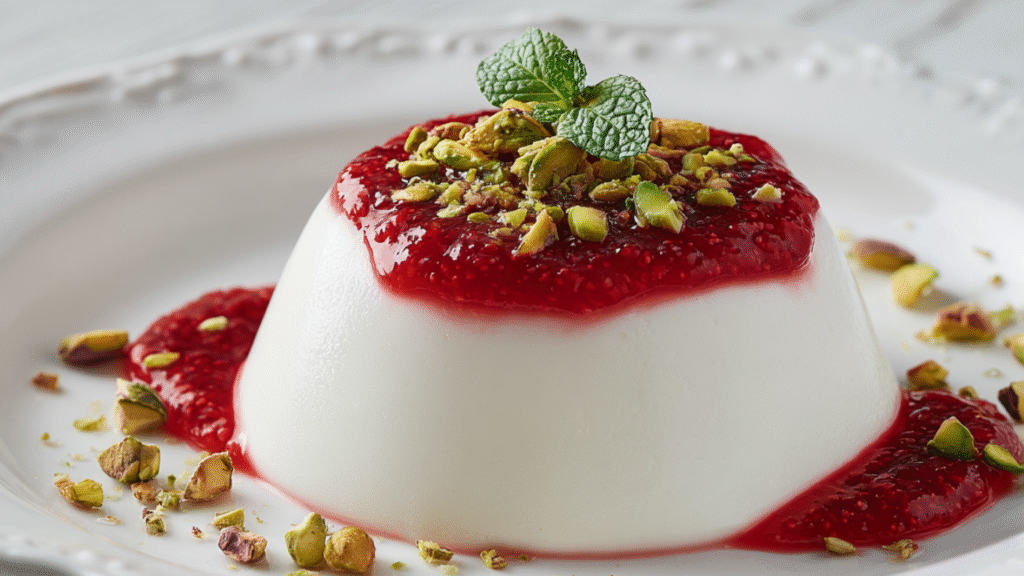
Its simplicity made it beloved in both home kitchens and restaurants. Chefs prize it for how easily it pairs with sauces — raspberry coulis, espresso syrup, or salted caramel — each highlighting the dessert’s creamy base.
At its heart, Panna Cotta is about precision and restraint. The cream should never boil; it only needs to warm enough to dissolve sugar and gelatin. After that, time and patience do the rest.
Learn more about Italian culinary heritage at La Cucina Italiana.
Crafting the Perfect Texture and Flavor
Making Panna Cotta is less about skill and more about precision. Every small detail — from the heat of the cream to the chill of the fridge — shapes the final texture.
Getting the Gelatin Right
The magic of Panna Cotta lies in gelatin balance. Too much, and you’ll end up with a rubbery block. Too little, and it won’t hold its shape. The goal is a soft, delicate set — a spoon should glide through it like butter.
To achieve this, bloom gelatin in cold water first, then stir it into warm (not boiling) cream. Boiling can ruin the smoothness. Once combined, pour the mixture into molds and chill for at least six hours.
Flavor Variations
The classic vanilla version is timeless, but this dessert loves creativity.
Try these variations:
- Espresso Panna Cotta: Add a shot of strong coffee for depth.
- Coconut Milk Panna Cotta: Dairy-free and tropical.
- Lemon Zest & Thyme: Bright and refreshing.
Each version highlights the same silky foundation while adding new dimensions of flavor.
Serving and Pairing Panna Cotta
How to Serve It
Panna Cotta shines in its presentation. Unmolded onto a plate, it looks traditional and refined. Served in glass cups, it feels contemporary and effortless. Either way, it should always be chilled — never frozen.
For a restaurant-style finish, pair it with:
- Fruit sauces (raspberry, mango, or strawberry)
- Caramel or chocolate drizzle
- Toasted nuts or biscotti crumbs for crunch
- Fresh mint or citrus zest for aroma
A Lighter Choice
Compared to desserts like Crème Brûlée, Panna Cotta is typically lighter. It skips the egg yolks and sugar crust, relying on gelatin for structure. This means fewer calories and less fat, without sacrificing creaminess.
For a healthier twist, replace half the cream with Greek yogurt or almond milk. It adds a gentle tang and lowers richness while maintaining that signature silkiness.
For presentation inspiration, check BBC Good Food’s plating tips.
The Legacy and Modern Reinventions
A Dessert That Endures
Even after a century, Panna Cotta remains a favorite among chefs and home cooks alike. Its charm lies in its restraint — simple ingredients transformed through technique.
It’s a dessert that embodies Italian values: beauty through simplicity. It requires patience, not perfection; attention, not extravagance.
Modern Takes
Contemporary chefs have given Panna Cotta countless creative spins:
- Salted Caramel Panna Cotta for a bold, buttery flavor.
- Matcha Panna Cotta blending East and West.
- Berry Layered Panna Cotta with colorful fruit purées.
- Vegan Coconut Panna Cotta using agar-agar instead of gelatin.
Each reinvention keeps the heart of the original while opening new possibilities.
A Taste of Tradition
In Italy, Panna Cotta sits alongside tiramisu and cannoli as a symbol of culinary artistry. But what makes it stand out is its quiet confidence — the idea that less can truly be more.
If you want to explore more old-world desserts, read Eataly’s guide to Italian sweets.
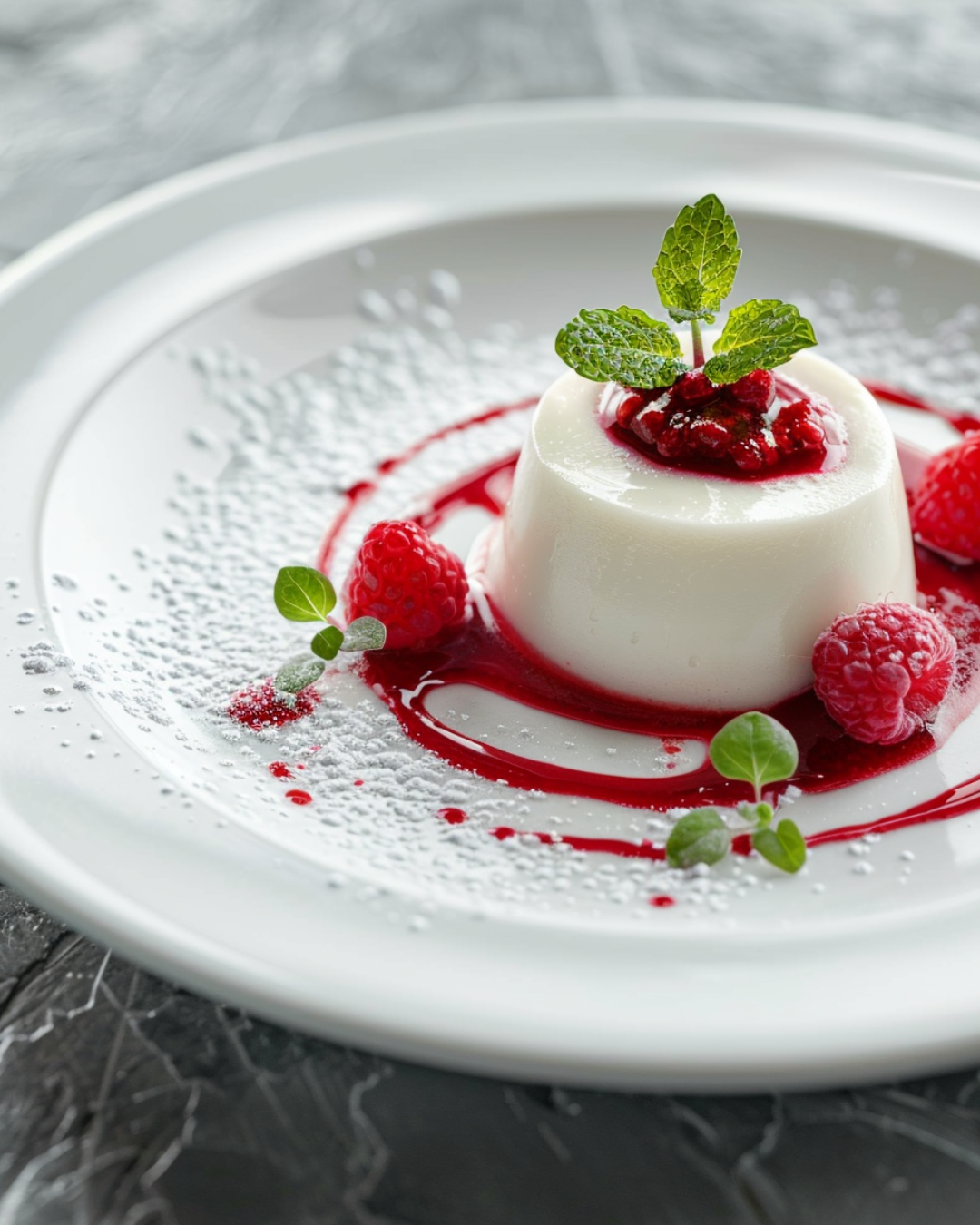
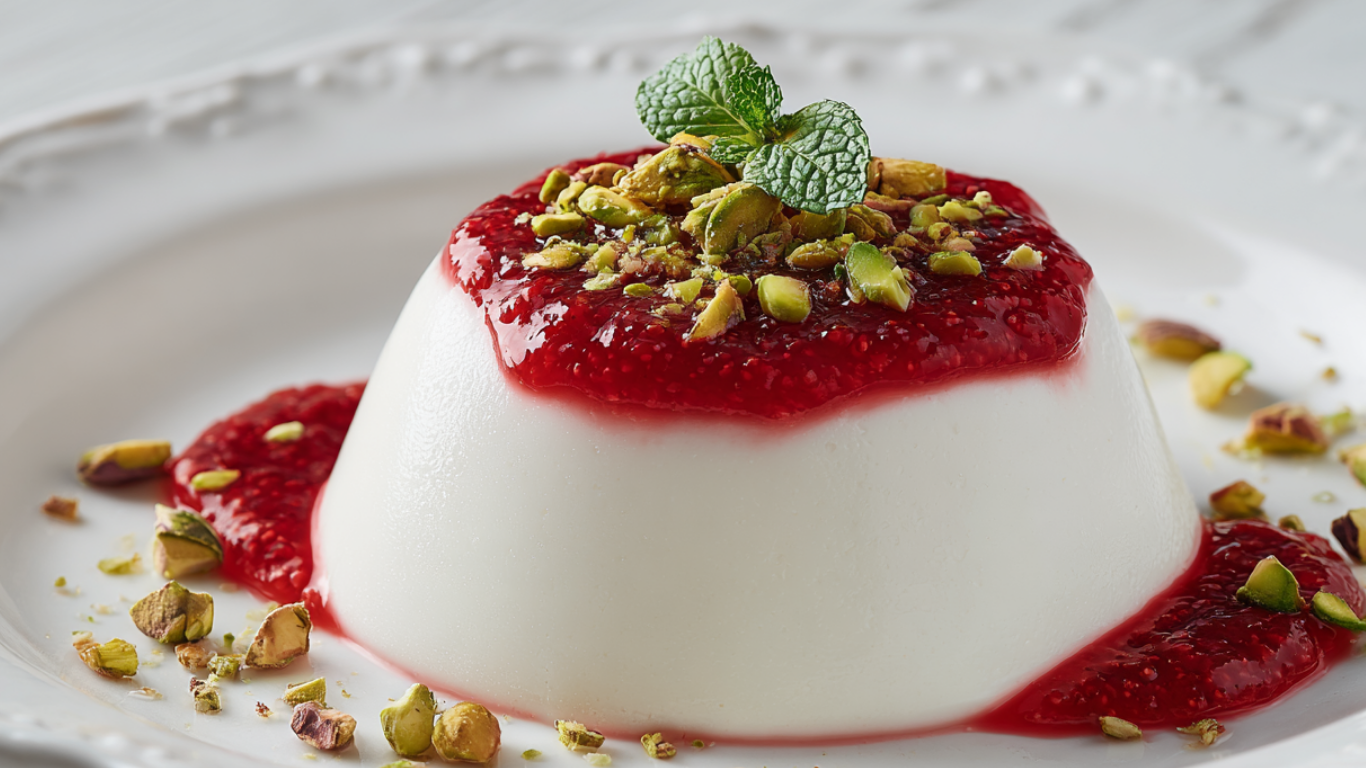

Vanilla Panna Cotta with Raspberry Coulis
Ingredients
Method
- Bloom gelatin in ½ cup milk for 5 minutes.
- Warm gently to dissolve gelatin completely.
- Add remaining milk, sugar, vanilla, and salt. Stir until sugar dissolves.
- Cool mixture slightly, then add cream.
- Refrigerate mixture uncovered for 1 hour, stirring occasionally.
- Pour into oiled molds, chill 6 hours or overnight.
- To serve, unmold or present in glass and garnish with coulis and pistachios.
Nutrition
Notes
• Do not boil the milk or cream.
• Refrigerate panna cotta for at least 6 hours before serving.
• Store covered for up to 7 days.
Tried this recipe?
Let us know how it was!FAQs About Panna Cotta
1. What is the oldest Italian dessert?
Panforte di Siena and Cannoli Siciliani are among Italy’s oldest desserts, tracing back to medieval times. Panna Cotta emerged later but quickly became iconic.
2. What do you eat panna cotta with?
It pairs beautifully with fruit sauces, caramel, or chocolate. Try adding berries, citrus zest, or crushed biscotti for contrast.
3. Which is healthier, crème brûlée or panna cotta?
Panna Cotta is generally lighter, as it skips egg yolks and has less sugar and fat compared to crème brûlée.
4. What is the tastiest ice cream in the world?
Many consider Italian gelato, especially pistachio or hazelnut, the best for its dense, creamy texture and natural flavor.
Conclusion
Panna Cotta is the perfect reminder that elegance doesn’t have to be complicated. With just a few quality ingredients, a gentle hand, and a little patience, you can create a dessert that feels timeless and sophisticated.
From its humble origins in Piedmont to its modern-day global fame, Panna Cotta continues to enchant with its smooth texture and delicate flavor.
If you make this recipe, tag your photos #LovingDishes — I’d love to see your creations!
Here’s to creamy desserts, simple joy, and the art of making something extraordinary from the simplest of things.