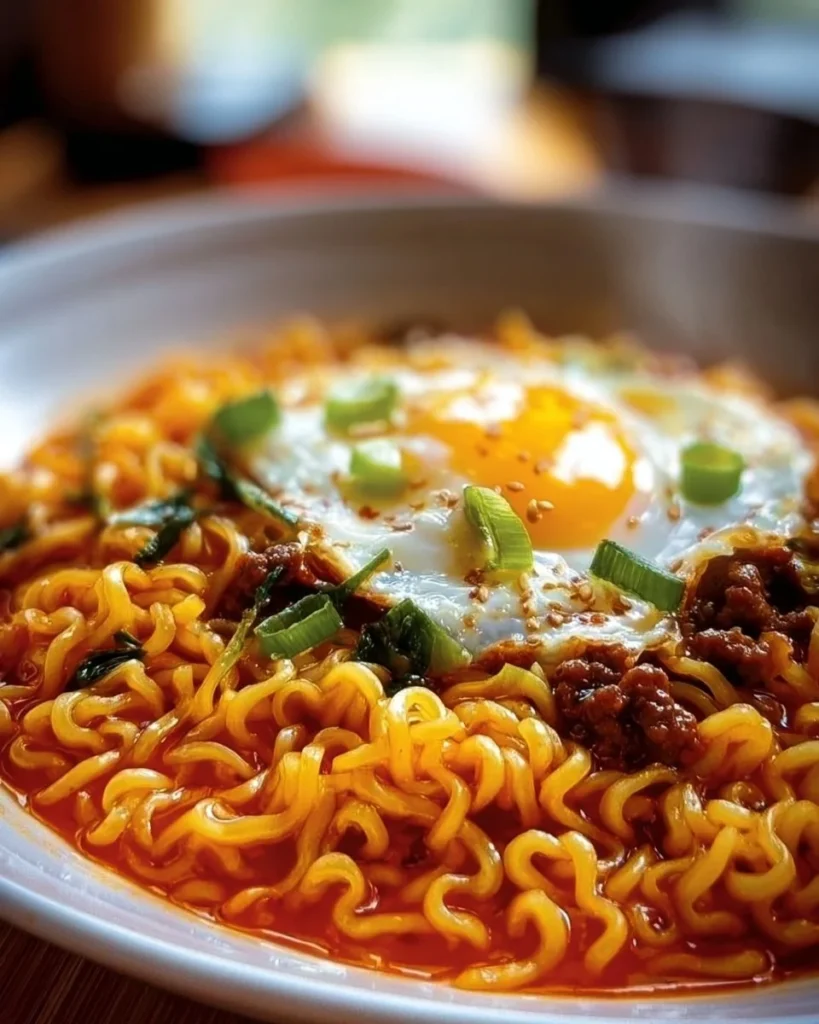
Korean Spicy Ramen with Beef
Introduction
I remember the first time I made this Korean spicy ramen with beef—late, rainy, and hungry—when I wanted something faster than takeout but more satisfying than plain noodles. The steam, the garlicky aroma, and that kick of gochujang felt like a warm blanket. If you love bold flavors and comfort food, this is your kind of bowl. For a fresh side, I often pair it with a simple salad like this green bean salad with feta to cut through the heat.
What makes this recipe special (short)
This dish balances spicy, savory, and slightly sweet in one pot: caramelized beef, umami-rich broth, and chewy instant ramen upgraded with fresh add-ins. It’s a quick, one-skillet weeknight dinner that tastes like something you’d order at a Korean bistro—only faster and customizable.
Ingredients
- 8 oz thinly sliced beef (flank, ribeye, or sirloin), cut into bite-sized strips
- 1 tablespoon vegetable oil (or neutral oil)
- 3 cloves garlic, minced
- 1 small onion, thinly sliced
- 1 tablespoon ginger, grated (optional)
- 1½ tablespoons gochujang (Korean chili paste)
- 1 tablespoon gochugaru (Korean chili flakes) or ½ teaspoon cayenne (optional for extra heat)
- 1 tablespoon soy sauce
- 1 tablespoon mirin or rice wine (or 1 tsp sugar)
- 2 cups beef or chicken broth (plus extra if you like more soup)
- 1 package (about 85–100 g) instant ramen noodles (discard the seasoning packet)
- 1 scallion, thinly sliced, plus extra for garnish
- 1 cup baby spinach or bok choy
- 1 soft-boiled egg (optional)
- Toasted sesame seeds and sesame oil, to finish
Notes & substitutions: Use thin pork or chicken if you prefer. For a shortcut, see my twist on crunchy proteins like this pretzel chicken with mustard cheddar recipe to inspire texture swaps.
Step-by-step instructions
Begin by heating the oil in a medium pot over medium-high heat. Add the beef in a single layer and let it sear for about 1–2 minutes without stirring so it gets a little color. Look for browned edges—this is flavor.
Push the beef to the side, lower the heat slightly, then add onion, garlic, and ginger. Sauté until the onion softens and becomes translucent, about 2–3 minutes. This creates the aromatic base.
Stir in the gochujang and soy sauce. Cook for 30–45 seconds to bloom the chili paste—this mellows its raw sharpness and deepens the flavor. If you want extra heat, sprinkle in gochugaru now.
Pour in the broth and bring it to a simmer. Scrape the bottom of the pot to lift any browned bits; they add richness to the soup. Taste and adjust saltiness with a splash more soy sauce or a pinch of sugar to balance the heat.
Add the ramen noodles and cook according to package directions (usually 2–3 minutes). You’re aiming for chewy, not mushy—timing matters. During the last minute, fold in the spinach or bok choy so it wilts but stays bright.
Turn off the heat and stir in the scallions and a drizzle of sesame oil. Ladle into bowls, top with a halved soft-boiled egg, extra scallions, and sesame seeds. Enjoy while hot.
Serving Suggestions (100 words max)
Serve this ramen with crunchy, cool sides to balance the spice: quick cucumber kimchi or a crisp Asian slaw work beautifully. For a heartier meal, add a small plate of pan-fried dumplings or steamed rice on the side. A cold drink like barley tea or a citrusy soda helps temper the heat.
Tips & variations
- Make it vegetarian: swap beef for tofu (pan-fry until golden) and use vegetable broth plus mushroom soy for umami.
- More texture: top with sautéed mushrooms or bean sprouts for crunch.
- Batch-friendly: keep the components separate—broth, cooked beef, and noodles—if you plan to reheat.
- Heat control: decrease gochujang by half for milder flavor or add a spoonful of honey to soften the spice.
- Swap proteins: shredded rotisserie chicken or leftover roast beef are great. For a playful spin, pair with taco-inspired sides like a spicy potato soft taco recipe for a fun fusion night.
Q&A
Q: Can I use fresh ramen noodles instead of instant?
A: Absolutely—fresh noodles work wonderfully and cook faster. Reduce cook time to avoid over-softening.
Q: How can I prevent the noodles from getting soggy if I’m meal-prepping?
A: Store the broth and cooked beef separately from the noodles. Reheat broth and add noodles right before serving.
Q: Is gochujang very spicy?
A: Gochujang has both heat and sweetness; its spiciness varies by brand. Start with 1 tablespoon and adjust. Adding sugar or mirin can mellow it.
Q: Can I freeze this?
A: Broth and cooked beef freeze well, but noodles and fresh greens don’t. Freeze components separately and combine after reheating.
Behind the Scenes (100 words max)
When I first tested this recipe I overcooked the noodles—lesson learned. I also tried marinating the beef overnight, but a quick sear with the right seasoning delivered the same depth in a fraction of the time. Another trial added roasted garlic for sweetness; I liked it but found simple minced garlic keeps prep quick and flavors bright. The final version hit a balance: fast, fresh, and satisfying.
Final thoughts / Pairings
This bowl is perfect for weeknight dinners, cozy solo meals, or when friends drop by and you want comfort without fuss. Pair it with pickled vegetables, scallion pancakes, or a cold beer. Leftovers are great when components are stored separately. Give it an extra finishing splash of sesame oil for aroma just before serving.
Conclusion
If you’re curious for a slightly different but related take, check out this Spicy Korean Beef Noodles – Creme De La Crumb for another flavorful riff on Korean-style beef and noodles.
Let me know how your bowl turns out—can’t wait for you to try it!

Korean Spicy Ramen with Beef
Ingredients
Method
- Heat the oil in a medium pot over medium-high heat.
- Add the beef in a single layer and let it sear for about 1–2 minutes without stirring until browned.
- Push the beef to the side, lower the heat slightly, and add onion, garlic, and ginger. Sauté until translucent, about 2–3 minutes.
- Stir in the gochujang and soy sauce, cooking for 30–45 seconds.
- Pour in the broth, bring to a simmer, and scrape the bottom for browned bits.
- Taste and adjust saltiness with soy sauce or a pinch of sugar.
- Add ramen noodles and cook according to package directions (2–3 minutes), adding spinach or bok choy in the last minute.
- Turn off the heat, stir in scallions and sesame oil, then ladle into bowls.
- Top with a halved soft-boiled egg, extra scallions, and sesame seeds.